Project Overview

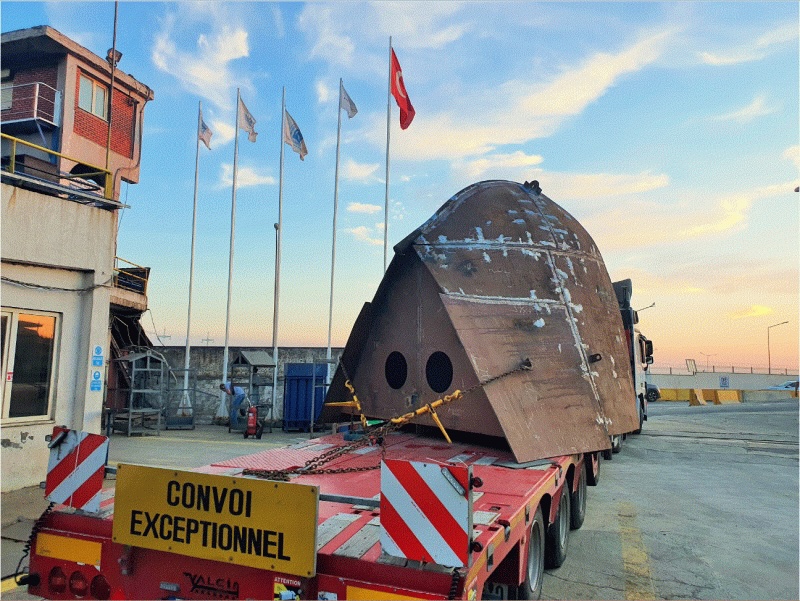
When a container vessel suffered catastrophic bow damage following a collision in Greek waters, traditional repair options presented an impossible dilemma: the vessel was immobilized and unable to reach repair facilities, while sourcing a replacement bulbous bow from standard suppliers would require months of lead time. The vessel's operators faced mounting daily losses, crew accommodation challenges and the urgent need to restore their asset to service. This is where Seaway Ship Services demonstrated the full spectrum of our marine engineering and international logistics capabilities.

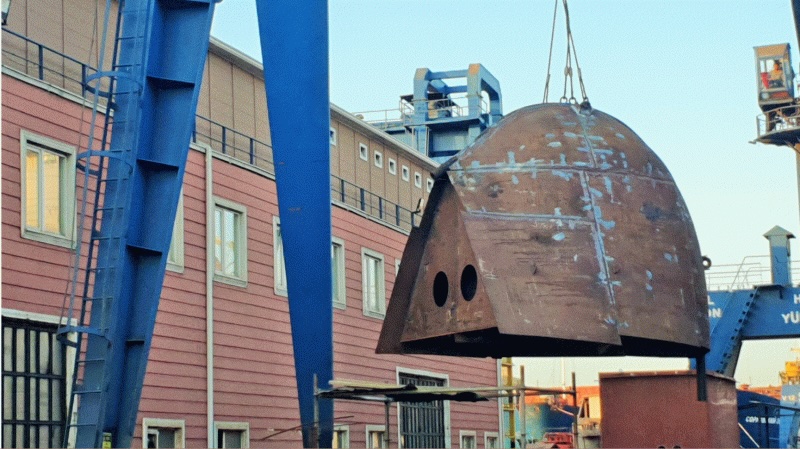
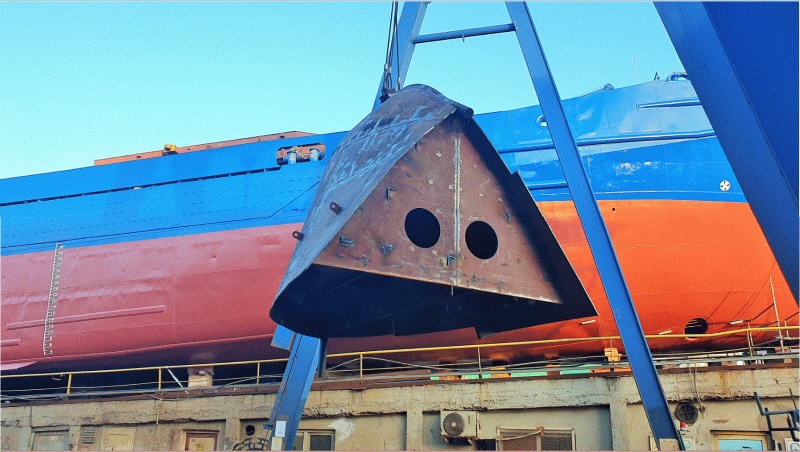
Our solution required orchestrating a complex multi-phase operation that would test every aspect of our technical expertise. First, our naval architects worked from classification drawings and detailed damage assessments to reverse-engineer the complete bulbous bow geometry. Then, our shipyard team fabricated a precision-engineered steel structure weighing over 35 tonnes, incorporating complex compound curves, precise plate thicknesses and critical hydrodynamic profiles. This wasn't simply steel fabricationβ€”it was precision marine engineering where millimeter-level accuracy would determine the vessel's future fuel efficiency and seakeeping performance.

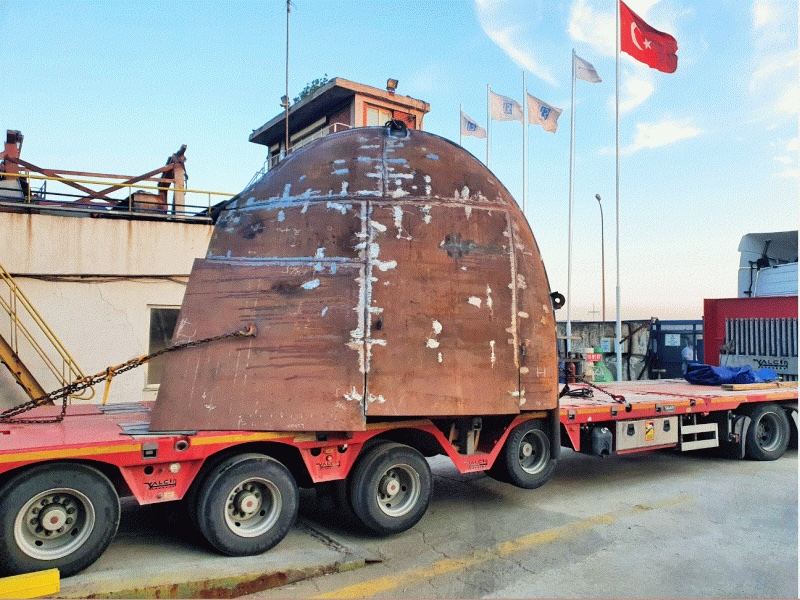
The final challenge proved equally demanding: coordinating international heavy-lift logistics across two countries, managing customs clearances, arranging specialized road transport for an oversized marine structure and delivering the completed bulbous bow to the repair site in Greece. From initial engineering through final delivery, Seaway managed every element of this turnkey solution, demonstrating why international vessel operators trust us with their most critical repair challenges. The project showcased our unique capability to deliver complete marine fabrication solutions with international reach.
⚠️

The Challenge

The container vessel suffered severe structural damage to its bulbous bow following a collision in Greek territorial waters. The damage rendered the vessel unable to proceed under its own power, creating an emergency situation with mounting daily costs for the operator. Traditional repair paths were blocked: the vessel couldn't move to repair facilities and ordering a replacement from original manufacturers would require 4-6 months of lead time.

The project demanded precision reverse-engineering of the bow structure from classification drawings, custom fabrication of complex marine geometry, quality assurance to classification society standards, coordination of international export logistics including customs clearance and permits, arrangement of specialized heavy-lift road transport and delivery to a foreign repair siteβ€”all within an accelerated timeline to minimize vessel downtime.

βœ…

Our Solution

Seaway mobilized a comprehensive turnkey solution combining in-house naval architecture expertise, certified shipyard fabrication capabilities and international logistics coordination. Our engineering team worked with classification society drawings to develop complete fabrication plans, while our shipyard commenced immediate production using certified marine-grade steel and experienced marine welders.

We managed the entire supply chain from raw materials through final delivery: precision steel cutting and forming, complex 3D assembly with compound curves, complete NDT testing and classification oversight, protective coating application, international export documentation and customs coordination, specialized heavy-lift trucking arrangements and on-site delivery to the Greek repair facility. The result: a complete, class-approved bulbous bow delivered in weeks rather than months.

Execution Process

Phase 1: Engineering & Design Development

Receipt of classification drawings and damage assessment reports from vessel operators and surveyors. Naval architecture team conducted detailed analysis of bulbous bow geometry, structural requirements and hydrodynamic profiles. Development of complete fabrication drawings including plate development, frame spacing, stiffener arrangements and weld details. Material specification for marine-grade steel plates and structural sections. Submission to classification society for approval and coordination of survey requirements throughout production.

Phase 2: Material Procurement & Preparation

Sourcing of certified marine-grade steel plates in required thicknesses from approved suppliers. Procurement of structural sections, stiffeners and connection hardware. Material certification and traceability documentation for classification requirements. Plasma cutting of steel plates to developed patterns accounting for shrinkage and forming allowances. Preparation of workshop facilities and assignment of experienced marine welders and fabricators to project.

Phase 3: Structural Fabrication & Assembly

Formation of complex compound-curved shell plates using hydraulic press and heating techniques. Construction of internal framework including transverse frames and longitudinal stiffeners. Progressive assembly of bulbous bow structure on dedicated fabrication jig ensuring dimensional accuracy. Precision welding by certified marine welders following approved welding procedures. Continuous dimensional control and quality assurance throughout assembly process to ensure hydrodynamic profile accuracy.

Phase 4: Quality Control & Classification Approval

Comprehensive non-destructive testing (NDT) program including ultrasonic testing of welds, magnetic particle inspection and visual examination. Classification society surveys at critical stages including material approval, during fabrication inspections and final structural survey. Dimensional verification of completed structure against approved drawings. Hydrostatic testing of compartments where applicable. Documentation of all inspection results and test certificates for class records and owner's files.

Phase 5: Surface Treatment & Protection

Surface preparation including abrasive blasting to specified cleanliness standards for marine coating application. Application of approved coating system including shop primer, anticorrosive coatings and protective paint layers. Quality control of coating thickness and adhesion testing. Installation of temporary protection for transportation including padding of critical contact points and securing of loose items. Preparation of lifting points and rigging arrangements for load-out operations.

Phase 6: Export Logistics & International Transport

Coordination of export documentation including commercial invoices, packing lists and certificates of origin. Customs clearance procedures in Turkey for temporary export of marine equipment. Arrangement of specialized heavy-lift road transport with oversized load permits and route surveys. Heavy-lift crane operations for load-out onto transport trailer. Road transport from Yalova Shipyard to ferry terminal with police escort for oversized cargo. Ferry transport across Marmara Sea and continuation via highway to Greek border. Greek customs coordination and final delivery to Piraeus repair facility. Successful handover to vessel operators and installation contractors with complete documentation package.

Project Gallery

Technical Specifications

βš–οΈ

Structure Weight

35+ Tonnes

Complete fabricated steel structure including internal framing and stiffeners

πŸ“

Dimensions

8.5m Length

Maximum length from tip to aft connection flange

πŸ”§

Material Grade

AH36 Steel

High-strength marine-grade steel certified to classification requirements

⏱️

Production Time

6 Weeks

From engineering approval to final delivery in Greece