Project Overview

When a vessel operator planning heavy cargo operations at Izmir Port—one of Turkey's busiest maritime hubs—required specialized lifting equipment for an urgent international shipment to São Paulo, Brazil, they faced a critical challenge: standard lifting gear couldn't safely handle their oversized cargo configuration. The operation demanded custom-engineered lifting beams capable of distributing 40 tonnes of load across multiple lift points while maintaining structural integrity throughout loading operations in Turkey and subsequent discharge operations halfway around the world in South America. With the vessel's arrival imminent and cargo operations scheduled within a tight commercial window, Seaway Ship Services was challenged to deliver a complete turnkey solution—from initial engineering through fabrication, testing, certification and delivery—in just 10 days.

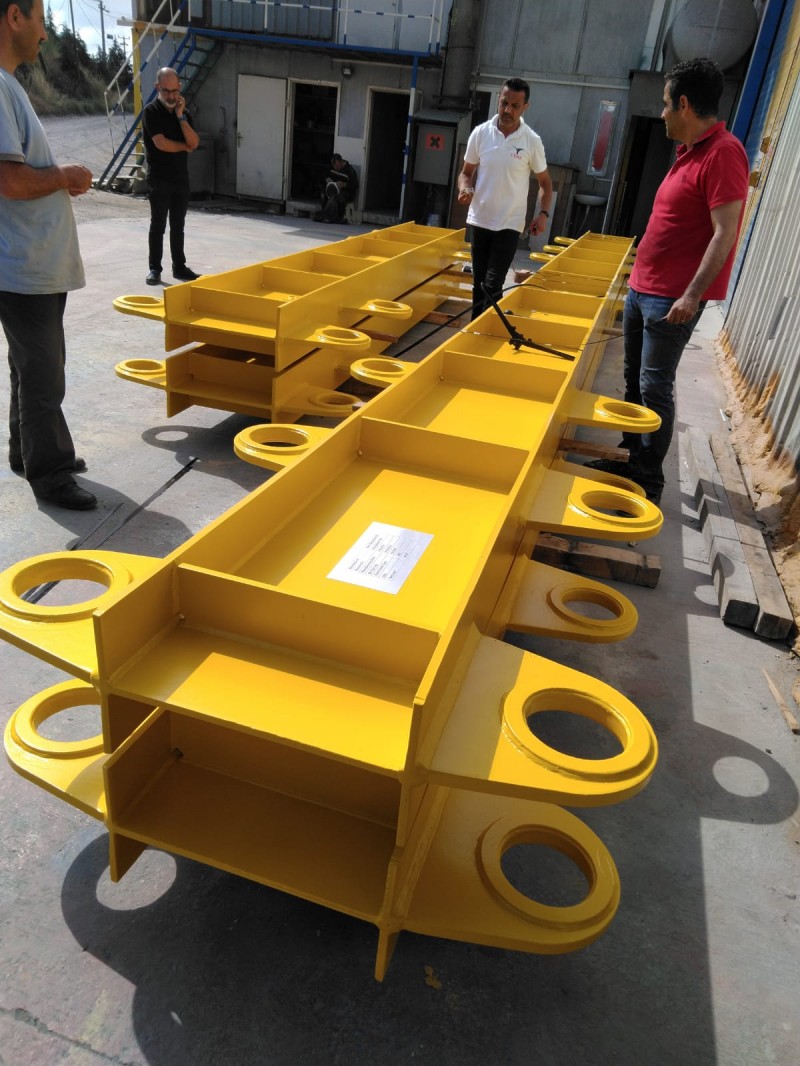
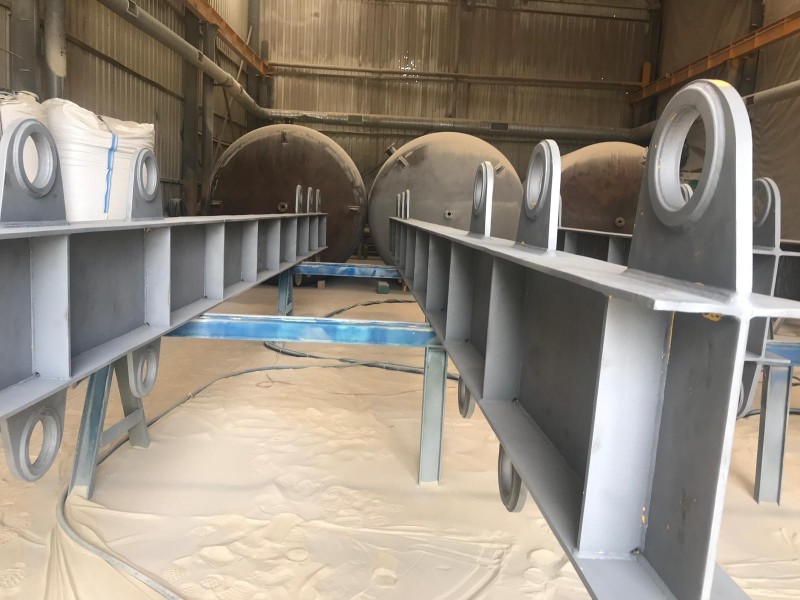
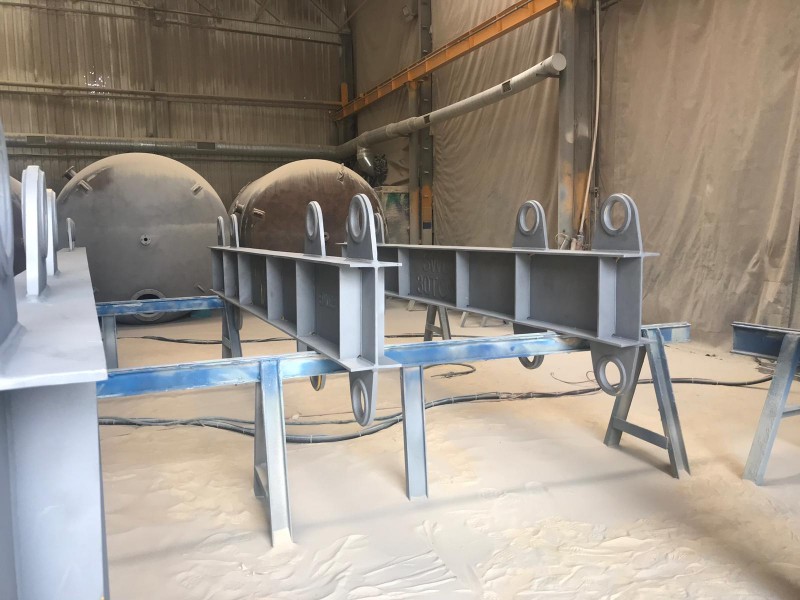
This project exemplified the convergence of precision engineering, rapid fabrication capabilities and rigorous quality assurance that defines Seaway's approach to critical marine equipment. Our engineering team began with comprehensive load analysis and structural calculations, developing lifting beam designs that would safely distribute the cargo's weight across multiple attachment points while accounting for dynamic loading factors during crane operations. The design incorporated reinforced box-section construction with internal stiffeners, precision-machined lifting eyes rated for individual loads and strategically positioned attachment points to ensure load balance. Every aspect of the design required validation through finite element analysis (FEA) to identify stress concentrations and verify safety factors.

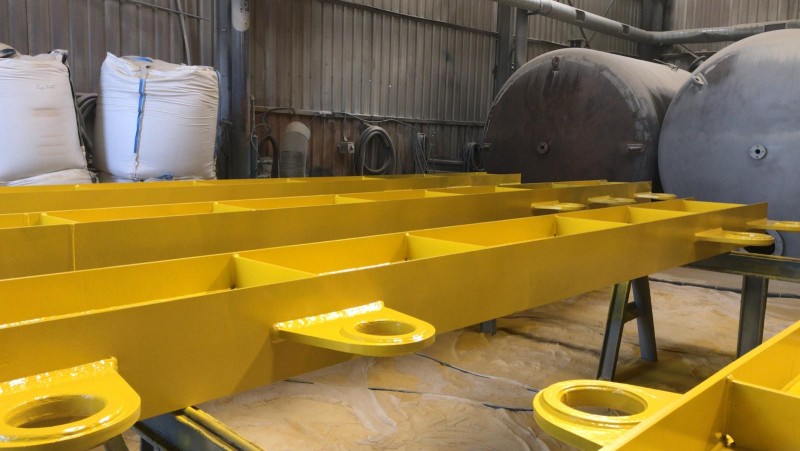
The fabrication phase demanded meticulous attention to detail and quality at every stage. Our shipyard team executed precision steel cutting and forming operations, complex welding by certified marine welders following approved procedures and dimensional control throughout assembly to ensure the lifting beams would perform exactly as engineered. Following fabrication, each beam underwent comprehensive non-destructive testing including ultrasonic examination of critical welds and magnetic particle inspection for surface defects. The final validation came through certified load testing at 102% of safe working load (40.8 tonnes test load for 40-tonne SWL), witnessed by classification society surveyors who issued full certification for international use. The completed beams—finished in high-visibility safety yellow coating—were delivered to Izmir Port ready for immediate deployment, enabling successful cargo operations in both Turkey and Brazil while meeting all international maritime safety standards.
⚠️

The Challenge

The vessel operator required custom lifting beams for specialized heavy cargo operations at Izmir Port with subsequent use at São Paulo, Brazil. Standard lifting equipment couldn't accommodate the unique cargo geometry and weight distribution requirements. The 40-tonne capacity beams needed to meet international classification standards for use in multiple countries, handle dynamic loading during crane operations and distribute loads across multiple attachment points safely.

Critical constraints included: 10-day delivery deadline from order to port delivery, full classification society certification required for international operations, load testing at 102% SWL (40.8 tonnes) with witnessed certification, precision engineering for load distribution across multiple lift points, structural integrity for repeated use in loading and discharge operations, compliance with Brazilian port authority requirements and high-visibility safety coating for operational visibility during cargo handling.

Our Solution

Seaway deployed integrated engineering and fabrication capabilities combining naval architecture expertise, shipyard production facilities, certified welding capabilities and load testing infrastructure. Our approach: immediate structural analysis and FEA modeling to optimize beam geometry, precision material selection using high-strength marine-grade steel, detailed fabrication drawings with weld procedures and NDT requirements and rapid production scheduling to meet aggressive timeline.

Fabrication execution included: precision plasma cutting of steel plates and structural sections, box-section construction with internal stiffeners for torsional rigidity, certified welding by coded welders following approved WPS procedures, precision machining of lifting eyes and attachment points, comprehensive NDT including ultrasonic testing and magnetic particle inspection, certified load testing at 40.8 tonnes with calibrated test equipment, classification society survey and certification, application of high-visibility yellow coating system and delivery to Izmir Port with complete documentation package including test certificates, operating instructions and maintenance guidelines.

Execution Process

Day 1-2: Engineering & Design Development

Receipt of customer's cargo specifications including weight, dimensions, center of gravity location and lift point requirements. Structural engineering team conducted comprehensive load analysis including static loads, dynamic factors during lifting operations and stress distribution across beam structure. Development of lifting beam design incorporating reinforced box-section construction, internal stiffeners for load distribution, precision-machined lifting eyes and multiple attachment points for cargo securing. Finite element analysis (FEA) modeling to verify structural adequacy and identify potential stress concentrations. Calculation of safety factors ensuring 4:1 minimum ratio between ultimate strength and safe working load. Material selection specifying high-strength structural steel grade with certified material properties. Preparation of detailed fabrication drawings including dimensional specifications, weld details, NDT requirements and quality control checkpoints. Submission to classification society for design approval and coordination of survey schedule for load testing witness.

Day 3-5: Material Procurement & Fabrication Preparation

Sourcing of certified high-strength structural steel plates and sections from approved suppliers with full material traceability certificates. Procurement of lifting eyes, shackles and hardware from certified manufacturers meeting international standards. Material inspection and verification of mill certificates confirming mechanical properties and chemical composition. Transfer of materials to workshop and assignment of project to experienced fabrication team. Setup of fabrication jig ensuring dimensional accuracy throughout assembly process. Precision plasma cutting of steel plates to developed patterns with allowances for welding shrinkage. Cutting of structural sections and stiffeners to exact lengths. Edge preparation including beveling for full-penetration welds on critical joints. Pre-assembly dry fit to verify component fit-up before welding commences.

Day 5-7: Structural Fabrication & Welding

Sequential assembly of lifting beam structure starting with main longitudinal box sections. Welding of internal stiffeners to plate sections prior to box closure ensuring accessibility for quality welds. Progressive assembly maintaining dimensional control using precision measurement tools and alignment fixtures. All critical welds executed by coded welders certified for structural steel welding per international standards. Welding procedures followed approved WPS (Welding Procedure Specifications) including preheat requirements, interpass temperatures and post-weld cooling rates. Continuous quality monitoring by welding supervisor ensuring proper technique and weld quality. Installation of lifting eyes using full-penetration welds with backing bars where specified. Fabrication of attachment points and securing hardware brackets. Precision machining of critical bearing surfaces and pin holes. Installation of reinforcement plates at high-stress locations identified in FEA analysis. Final dimensional verification confirming all critical dimensions within specified tolerances.

Day 7-8: Quality Control & Non-Destructive Testing

Comprehensive NDT program executed by certified Level II inspectors following written procedures. Visual examination of all welds for surface defects including cracks, undercut, porosity and incomplete fusion. Magnetic particle testing (MT) of critical welds and lifting eyes for detection of surface and near-surface discontinuities. Ultrasonic testing (UT) of full-penetration welds for internal defect detection including lack of fusion and slag inclusions. Liquid penetrant testing (PT) of machined surfaces and areas inaccessible to magnetic particle testing. Documentation of all NDT results with accept/reject criteria per classification society standards. Any identified defects remedied through grinding, re-welding and re-testing until acceptance criteria achieved. Dimensional inspection verifying all critical dimensions including beam length, lift eye spacing, attachment point locations and perpendicularity of components. Preparation of quality documentation package including material certificates, welding records, NDT reports and dimensional inspection results.

Day 8-9: Load Testing & Classification Certification

Setup of certified load testing equipment including calibrated hydraulic jacks, load cells and measurement instrumentation. Positioning of lifting beams in test rig with proper support and attachment arrangements simulating operational configuration. Installation of strain gauges at critical locations to monitor stress levels during testing. Progressive loading protocol starting at 25% SWL and increasing in stages to 100% SWL (40 tonnes). Monitoring of beam deflection and strain readings at each load stage to verify elastic behavior. Hold time at 100% SWL to verify structural stability under sustained load. Increase to 102% SWL (40.8 tonnes) for certification test load as required by classification society rules. Measurement of permanent deformation after load release—acceptance criteria requires return to within 0.2mm of original dimensions. Classification society surveyor witness of entire load testing procedure. Review of all quality documentation including material certificates, welding records, NDT reports and test data. Successful completion of load test meeting all acceptance criteria. Issuance of classification society certificate approving lifting beams for 40-tonne safe working load.

Day 9-10: Surface Treatment & Delivery

Preparation of surfaces for coating including power tool cleaning to remove mill scale, weld spatter and contaminants. Application of high-visibility safety yellow coating system including corrosion-inhibiting primer and durable topcoat. Installation of permanent identification plates stamped with SWL, serial number, test date and certification details. Attachment of lifting point identification markings clearly indicating proper rigging points. Preparation of comprehensive documentation package including: classification certificates, load test reports with witnessed signatures, material traceability certificates, welding procedure specifications, NDT reports with acceptance records, dimensional inspection results, operating instructions specifying proper rigging configurations, maintenance guidelines and recommended inspection intervals. Packaging of lifting beams with protective wrapping on machined surfaces and lift points. Loading onto transport vehicle using appropriate lifting equipment and securing for road transport. Delivery to customer's designated location at Izmir Port with handover to vessel's cargo operations team. Technical briefing for vessel's officers and stevedores covering proper rigging procedures, load limitations, inspection requirements and safe operating practices. Successful deployment of lifting beams for cargo loading operations at Izmir with subsequent use at São Paulo, Brazil, discharge operations.

Project Gallery

Technical Specifications

⚖️

Safe Working Load

40 Tonnes

Maximum operational capacity per lifting beam

🔬

Test Load

40.8 Tonnes

102% SWL proof load with classification witness

⏱️

Production Time

10 Days

Complete design, fabrication and certification

🏗️

Construction Type

Box Section

Reinforced with internal stiffeners

Certification

Class Approved

International classification society certified

🌎

Usage

Turkey → Brazil

Izmir loading, São Paulo discharge operations